
Summary: Thirty-one Articles have Been Included
페이지 정보
작성자 Reyes Quinlan 작성일25-09-17 06:51 조회24회 댓글0건관련링크
본문
Background: The cerebrovascular reactivity (CVR) results of blood oxygen degree-dependent (Bold) and arterial spin labeling (ASL) MRI research performed in patients with cerebrovascular illness (steno-occlusive vascular disease or stroke) were systematically reviewed. Summary: Thirty-one articles had been included. Twenty-three (74.2%) studies used Bold MRI to judge the CVR, BloodVitals monitor 4 (12.9%) studies used ASL MRI and four (12.9%) research used both Bold and ASL MRI. Thirteen studies (three important) discovered a lower Bold CVR, 2 research discovered an analogous CVR and three research found the next CVR within the ipsilateral compared to the contralateral hemisphere. Nine (5 vital) out of 10 studies found a decrease Bold CVR within the ipsilateral hemispheres of patients compared to controls. Six research (2 important) found a lower ASL CVR within the ipsilateral compared to the contralateral hemispheres. Three out of 5 research discovered a significant decrease ASL CVR within the ipsilateral hemispheres of patients compared to controls. Key messages: This overview brings help for a decreased Bold and BloodVitals monitor ASL CVR within the ipsilateral hemisphere of patients with cerebrovascular illness. We suggest that future studies can be carried out in a uniform way so reference values might be established and could possibly be used to information remedy decisions in patients with cerebrovascular disease.
 The Apple Watch Series 6 feels like it has perfected lots of the features I preferred about its predecessor. It has a brighter at all times-on display, a extra highly effective processor, quicker charging and two new colorful choices to select from. But the characteristic I was most excited to try out was its new sensor that measures oxygen saturation within the blood (aka SpO2) with the tap of a display. As somebody who panic-bought a pulse oximeter at the start of the coronavirus pandemic and nonetheless checks her ranges at the primary sign of a cough, the thought of getting one strapped to my wrist at all times was enough to pique my interest. But not like the ECG function on the Apple Watch, which has been tried, tested and cleared by the US Food and Drug Administration, together with the irregular coronary heart rhythm notifications, BloodVitals SPO2 on the Apple Watch still seems to be in its early levels. Navigating all this new information could be daunting for anybody who's not a medical skilled.
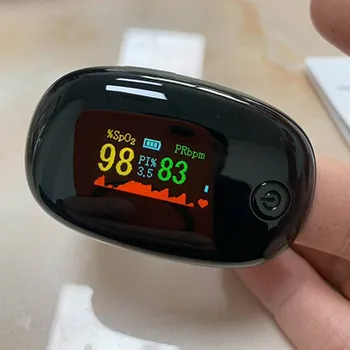
I purchased an FDA-cleared pulse oximeter, the system docs use to measure SpO2 in your fingertip, as a precaution when coronavirus circumstances in the US started to climb. Having low blood oxygen ranges doesn't assure you will have COVID-19, but it's one of the most important signs of the illness. I had read horror stories of people who waited too long to go to the hospital and had died of their sleep as a result of they didn't notice their ranges had dipped in a single day. You should always test with a physician if you're experiencing shortness of breath (another symptom of COVID-19), even if a pulse oximeter says you are in a healthy vary, but I discovered comfort in figuring out that I may at the least use it as a reference if I ever skilled shortness of breath. That's not something you are able to do with the Apple Watch -- Apple says it must be used for wellness functions only and never as a medical device, that means you will must take the results with a grain of salt and should not use it to screen for any sort of illness, which is what I had been hoping to get out of it.
But there could also be different advantages of having it strapped on your wrist always. Very like a pulse oximeter, the Series 6 uses pink and infrared gentle from its new sensor to determine the proportion of oxygen within the blood. But instead of shining the light through your fingertip, it uses the light that is reflected again from the blood vessels in your wrist to determine your oxygen ranges based on the shade of your blood. Through the setup process you're asked whether or not you need to activate SpO2 tracking, which I did, but you'll be able to all the time go back and disable it within the settings after the fact. The very first thing I did after strapping on the Watch was open the Blood Oxygen app. It gives you a few recommendations on methods to get the most effective end result and it's good to relaxation your arm on a desk or flat floor whereas the Watch is taking a studying.
Then the 15-second countdown begins and you're carried out -- easy and painless. I obtained a 95% on my first learn, which was lower than what I'm used to from my pulse oximeter. Anything above 90% is usually considered by clinicians to be within a healthy range, however in most cases, larger is better. I examined it a couple of more instances and received barely different results within a few proportion factors depending on whether or not I used to be fully nonetheless and silent during the check, where I had the watch positioned on my wrist and how tight the strap was. There are lots of components that may affect a studying, corresponding to skin temperature or the place of the sensors on the physique. Side-by-aspect with my pulse oximeter, the Apple Watch was typically off by about one or two points, but sometimes spot on. What was more attention-grabbing to me was the SpO2 information that collected over time within the Health app .
댓글목록
등록된 댓글이 없습니다.