
14 Cartoons About Machine Espresso That'll Brighten Your Day
페이지 정보
작성자 Annis 작성일25-02-13 10:43 조회15회 댓글0건관련링크
본문
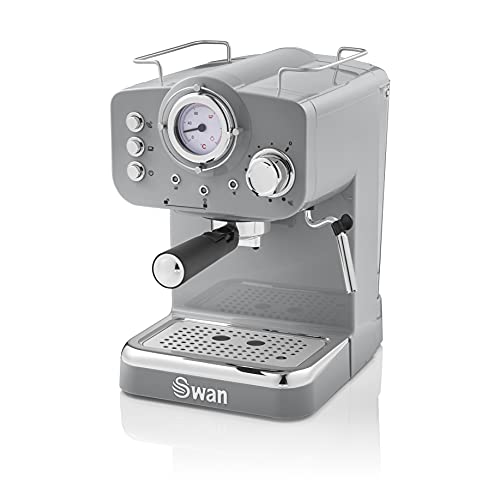 How Does Machine Espresso Work?
The machine Travel espresso coffee machines for sale maker; https://www.ddhszz.com/home.php?mod=space&uid=3931799, is made using precision pressure, and filter technology that is awe-inspiring to make the coffee and espresso machine you love. How exactly does it work?
In order to make espresso hot water is pushed under pressure through finely ground coffee. The process is similar to making drip coffee but the major difference is in the pressure.
The Head of the Group
As the name implies, the group head is the place you put your portafilter in when brewing espresso. It disperses water into the portafilter, [Redirect-302] and then regulates the pressure of extraction. There are numerous kinds of group heads each with distinct advantages and drawbacks. Some are focused on temperature stability, while others on pre-infusion capabilities, while others are designed to control the lever. Some have a combination of features, like the E61, which is considered the most popular choice among baristas for its ability to offer multiple perks in a single package.
As you can see in the above image the group head is made up of numerous notches that you can place your portafilter before twisting it with your hands to secure it. A gasket of rubber is situated in the notches to create a seal when you insert your portafilter. The notches allow for the precise placement of the portafilter. This is crucial for a consistent extraction.
Aside from allowing you to easily insert your portafilter, the group head is also responsible for maintaining a consistent temperature. It does this by circulating hot water through the brew container and around the portafilter, making sure that it is always at the correct temperature to extract. This is important, as even a small espresso machine difference in temperature can make the difference between good and excellent espresso.
The Pump
Unlike manual piston machines, which rely on a lever to pressurize water, Rotary espresso machines rely on motorized pumps to deliver the nine atmospheric bars of pressure necessary for espresso extraction. The pressure is built by pumping water through a heat-exchanger and then through the ground coffee.
Pumps tend to be less expensive and last longer than piston-driven machines. However, both kinds of machines can deteriorate due to overuse and inadequate cleaning. They also make mechanically complex that can lead to a high price tag on even the simplest models.
Certain espresso machines utilize steam pressure instead of a pump for brewing espresso. The downside is that the boiler that produces steam also increases the temperature of the water to boiling which can cause over-extraction. These machines also have to continuously rebuild their pressure between cups. This requires energy and time.
A majority of espresso machines utilize an rotary or a vibration pump. A vibration model utilizes an oscillating disk to create pressure, while a rotating model pushes hot water through the ground at a fast speed. Both types of machines are capable of producing excellent espresso, but the rotary pumps are quieter, and more durable than vibration pumps.
The Boiler
The boiler is the one that is used to heat the water to a temperature that is ideal for extraction. The resulting steam is then transferred to the portafilter which holds the ground espresso coffee and is then funneled down into the cup. During this process, the steam creates pressure that pushes through the coffee grounds. This results in a layer of crema on top. This is one of the main characteristics of a great espresso.
There are three distinct types of espresso machines, each having a different type of pump and brew temperature. There are also different ways in which the brew could be controlled as well as the size of the cup that the machine is capable of making.
The first espresso machines were steam-types. The first espresso machines were steam types. This led to the coffee tasting burnt and bitter. The modern espresso machine was created by the Milanese makers Luigi Bezzerra & Desiderio Pavoni.
The most commonly used espresso machine is a semiautomatic one with an electric pump. When people think of espresso machines, they imagine these machines. Semi-automatic machines require you to grind and tamp the beans yourself however the pump controls the flow of water and pressure. This is a perfect solution that combines human control with mechanized accuracy.
The Filter
Typically, espresso machines use a filter to separate out the grounds of the coffee as they go through the hot water. The filter is also an essential component of the machine's temp control, as it helps prevent overheating.
It also aids in flavor, as it lets you enjoy a longer bloom phase. This lets the beans release their nuances, and improves extraction.
It is important to remember that even the most efficient filter can produce a bad cup of coffee. The quality espresso machine of the beans, and the extraction, are still crucial.
This is where the magic happens, it's the thing that makes an espresso really taste good. The grouphead, often referred to as the brew head, is where the portafilter (the thingy you put the ground coffee in) is placed when you're making espresso.
In a steam-driven espresso machine hot water is heated in an airtight tank to create steam. This then pushes the hot water through the grounds at high pressure. These types of machines are typically less expensive and easier to maintain than pump-driven models. However, they are limited in their capacity to create the ideal brewing conditions, since they operate at 1-1.5 bars of pressure. However, the perfect shot requires 9-10 bar.
In recent times, espresso machines powered by a compressed air compressor have become increasingly popular. They use an air compressor to force hot water through the grounds, and are far more portable than steam-driven electric machines.
댓글목록
등록된 댓글이 없습니다.